
Tribal Educator Apprenticeship Program
Uvagut
Who We Are
Aullaaġvik is a teacher apprenticeship program for Alaska Native communities. It is registered with the U.S. Department of Labor and sponsored by the Arctic Slope Community Foundation. We partner with the University of Alaska Anchorage, University of Alaska Southeast and school districts across Alaska.
Apprentices are people already working in schools — paraprofessionals, aides, early childhood staff — who want to become certified teachers.
Here is what that looks like:
- You stay home. You keep living in your community and working in your school. College classes are online.
- You don’t have to choose between work and school. You continue in your job and earn your regular wage while you study.
- Your coursework is supported. ASCF provides a monthly payment of $300 or $500, depending on how many classes you are taking, for the time you spend in coursework and building your digital portfolio.
- School is free. ASCF covers tuition, fees, and books. No student loans.
- You have a mentor. A certified teacher at your school meets with you every week.
- You earn credentials. A Department of Labor credential, a UAA/UAS degree, and — at the higher levels — an Alaska teaching certificate.
Most apprentices start at Tribal Educator I and move up. There are paths for people with a high school diploma, people with an associate’s degree, and people who already hold a bachelor’s degree in something else.
How We Are Different
Alaska has other teacher apprenticeships. Here is what makes Aullaaġvik its own thing.
1. Culture is built into the framework, not added on top.
Our skills and competencies are written around the Inuit Circumpolar Council Education Strategies and the Alaska Cultural Standards, right alongside the national teaching standards.
2. Coursework in Indigenous pedagogy is required.
It is part of the degree, not a one-time training.
- Each apprentice completes three Community of Practice seminar classes. These connect Indigenous pedagogy to the actual skills and competencies of the apprenticeship.
- Apprentices are required to take Alaska Native language classes and Alaska Native studies classes.
- Mentors complete three Community of Practice seminar classes of their own, focused on mentoring grounded in a co-learning relationship. .
- All of these carry UAA credit.
3. Annual Cultural Immersion Gathering.
Mentors and apprentices attend an annual training together to build a co-learning relationship. Apprentices bring language, cultural knowledge, and an understanding of the community and its families. Mentors bring classroom experience and instructional practice. We spend the week together in language, learning from Elders, and land-based pedagogy — and we build relationships that hold up the rest of the year.
What is a Tribal Educator?
A Tribal Educator is a teacher who comes from the community and teaches from it.
Every community is different. What a Tribal Educator does in Anaktuvuk Pass is not identical to what one does in Kotzebue or Hooper Bay, because each community has its own values, its own language, its own way of doing things. What holds across all of them is a set of commitments. We organize them around four ideas.
Respect — Honoring who students are. A Tribal Educator helps students feel proud of where they come from, supports their Native language even while still learning it themselves, and teaches both ways — Western methods and the ways this community has always taught.
Relevance — What happens in school connects to what happens at home and out on the land. A Tribal Educator teaches the academic and job skills students need after graduation, and teaches them in ways that matter in this place.
Reciprocity — Knowledge moves both directions. A Tribal Educator brings Elders and knowledge bearers into the classroom, talks with families in ways that make sense here, and gives back to the community rather than only taking from it.
Responsibility — Stories and knowledge are given in trust. A Tribal Educator takes care of what the community has shared, and uses the community’s core values as the foundation for teaching students how to be with one another.
These are the same commitments the Inuit Circumpolar Council Education Strategies ask of schools. The four Rs name what those strategies look like in one teacher’s daily practice, and both shape the skills and competencies our apprentices are trained and evaluated on.
When students have a teacher who is from here and stayed, it changes what they believe is possible for themselves.
The four Rs — respect, relevance, reciprocity, and responsibility — come from Verna J. Kirkness and Ray Barnhardt, “First Nations and Higher Education: The Four R’s,” Journal of American Indian Education 30, no. 3 (1991). Ray Barnhardt spent his career at the University of Alaska Fairbanks.
Suna Aullaaġvik?
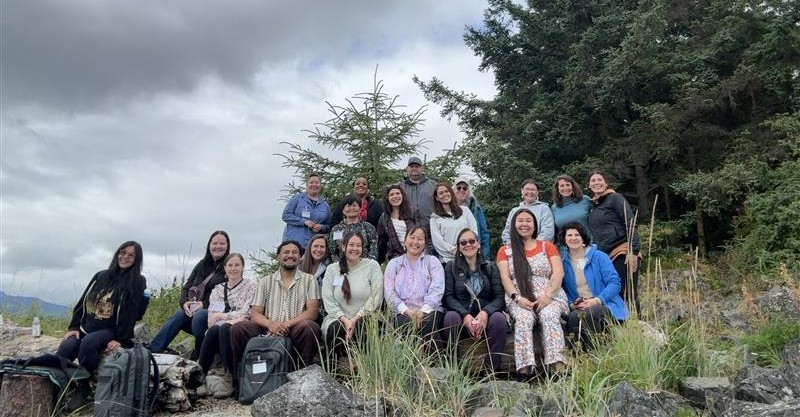
18
Teacher Apprentices
17
Mentors (Certified Teachers)
8
Participating Employers
Participating Employers
North Slope Borough School District
Northwest Arctic Borough School District
Kuspuk School District
Lower Yukon School District
Hooper Bay Charter School
Knik Charter School and Benteh STEAM Academy
Kenaitze Tribe and Tułen Charter School
Yupiit School District
Alutiingcut Child Care Center
Arctic Slope Community Foundation will not discriminate against apprenticeship applicants or apprentices based on race, color, religion, national origin, sex (including pregnancy, gender identity, and sexual orientation), sexual orientation, genetic information, or because they are an individual with a disability or a person 40-years old or older.
Arctic Slope Community Foundation will take affirmative action to provide equal opportunity in apprenticeship and will operate the apprenticeship program as required under Title 29 of the Code of Federal Regulations, part 30.